
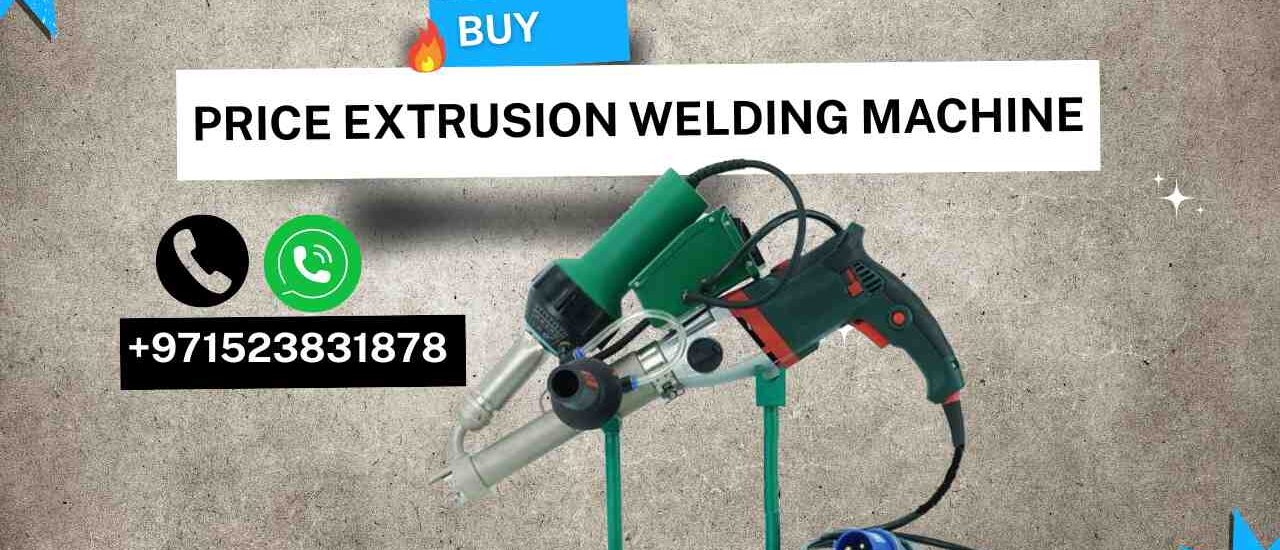
Price Extrusion Welding Machine: Complete Cost Guide for UAE Market
Understanding price extrusion welding machine options enables contractors and fabricators to make strategic equipment investments aligned with project requirements and budget parameters. Extrusion welding technology represents essential capability for geomembrane repair, detail work, and complex geometries where automated welding equipment cannot reach, making it indispensable for professional thermoplastic installation across environmental, construction, and industrial applications.
Investment Value and Equipment Pricing
Extrusion welding machines occupy a specialized niche in thermoplastic bonding technology, complementing automated wedge welders by handling intricate details, repairs, patches, corners, pipe penetrations, and T-joints. The Extrusion Welder for HDPE Geomembrane is competitively priced at AED 8,500 to AED 9,500, providing professional-grade capability for demanding applications across landfill construction, mining operations, water containment systems, and industrial facilities.
This pricing reflects sophisticated engineering incorporating precision temperature control, consistent material feed mechanisms, ergonomic design for extended operation, and durable construction withstanding harsh field conditions. The investment delivers substantial long-term value through versatility, reliability, and capability to perform critical welding tasks that automated equipment cannot accomplish.
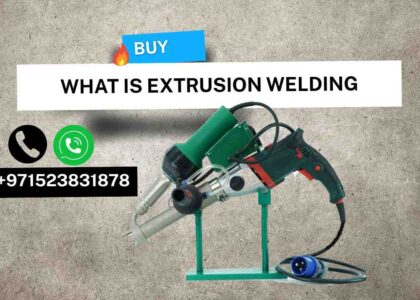
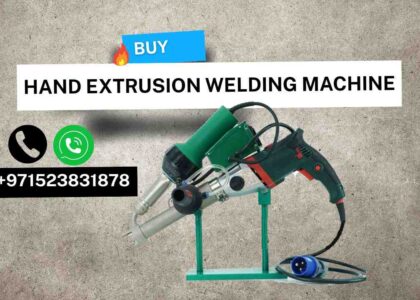
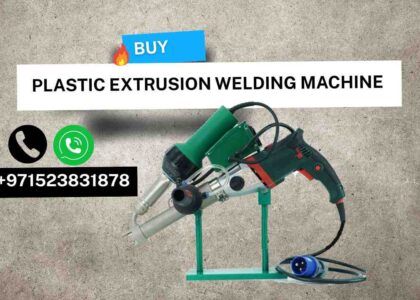
The Extrusion Welding Machine at AED 8,500 to AED 9,500 represents complete professional equipment ready for immediate deployment on demanding projects. This model incorporates advanced features including digital temperature displays, adjustable extrusion speeds, precision nozzle configurations, and robust heating elements ensuring consistent material processing across varied thermoplastic polymers.
Understanding Extrusion Welding Technology
Extrusion welding operates on fundamentally different principles than wedge welding systems. The equipment melts thermoplastic rod material—typically 4mm thick HDPE welding rod—and deposits it along seam edges, creating filler material that bonds with parent geomembrane surfaces. This process excels for detail work requiring manual control and precision placement impossible with automated systems.
Hot air directed through the extrusion gun simultaneously heats the welding rod and parent material surfaces, creating optimal bonding conditions. As molten rod material exits the nozzle, operators guide it along seam paths, building up filler material that fuses molecularly with surrounding thermoplastic surfaces. Proper technique creates bonds matching or exceeding parent material strength.
Applications Requiring Extrusion Welding
Extrusion welding handles specific applications where automated equipment proves impractical or impossible. Repair work represents the most common application—damaged geomembrane sections require careful patching using extrusion techniques to restore containment integrity. Field repairs avoid costly liner replacement while maintaining project schedules and environmental compliance.
Pipe penetrations through geomembrane liners demand extrusion welding for creating leak-proof seals around conduits, drainage pipes, and utility installations. Corner details, T-joints, and seam intersections require manual welding precision that extrusion equipment provides. Cap strips over wedge-welded seams add redundancy and quality assurance for critical containment applications.
Detail work around complex geometries, irregular surfaces, and three-dimensional structures benefits from extrusion welding flexibility. Sump construction, anchor trench details, and custom fabrication projects rely on this technology for professional results meeting stringent quality standards.
Factors Influencing Equipment Pricing
Several considerations affect extrusion welding machine costs in the competitive UAE market. Temperature control sophistication significantly impacts pricing—digital systems offering precise adjustments between 20°C and 650°C command premium positioning over basic controls. Extrusion rate capabilities influence cost, as higher-output models incorporate more powerful heating elements and enhanced material feed mechanisms.
Build quality and component durability determine long-term value. Professional-grade machines using premium heating elements, reinforced housings, and quality electrical components justify higher investment through extended service life and reduced maintenance frequency. Ergonomic design features including balanced weight distribution, comfortable grips, and intuitive controls enhance operator productivity during extended welding sessions.
Nozzle versatility affects equipment capability and pricing. Systems accommodating multiple nozzle configurations for different rod sizes and application types provide greater flexibility across varied project requirements. Brand reputation and manufacturer support contribute to pricing structures, with established companies offering comprehensive warranties and responsive technical assistance.
Cost-Benefit Analysis
Extrusion welding equipment ownership delivers substantial return on investment for active contractors. The capability to perform field repairs eliminates subcontracting costs and project delays waiting for specialized technicians. In-house repair capability provides competitive advantages when bidding maintenance contracts or offering comprehensive installation services including warranty repairs.
Equipment versatility enables service expansion into specialized applications including industrial tank fabrication, custom geomembrane manufacturing, and architectural waterproofing details. The relatively modest investment compared to automated welding systems makes extrusion equipment accessible for small-to-medium contractors building thermoplastic bonding capabilities.
Consumable costs remain reasonable with 4mm thick HDPE welding rod representing the primary ongoing expense. Rod consumption varies by application, but typical repair work uses minimal material compared to overall project costs.
Complementary Equipment Systems
Successful geomembrane installation operations typically require both automated and manual welding capabilities. While Top rated Wedge Welding Machine equipment priced at AED 5,500 to AED 12,000 handles long seams and high-volume production, extrusion welders provide essential capability for details, repairs, and complex geometries completing comprehensive installation services.
This equipment combination enables contractors to bid confidently on complete projects knowing they possess necessary tools for all welding requirements from initial installation through final details and quality assurance work. Buy the best rubber pond liner.
Financing and Procurement Options
Many UAE suppliers offer flexible payment arrangements, equipment financing programs, and package deals combining wedge welders with extrusion equipment at preferential pricing. These options preserve working capital while enabling complete equipment acquisition for expanding operations.
Quality Considerations
Price evaluation should incorporate warranty coverage, spare parts availability, technical support accessibility, and operator training programs. Equipment from established manufacturers backed by local service networks provides superior long-term value compared to imported machines lacking regional support infrastructure.
Conclusion
Extrusion welding machine pricing in the UAE market reflects professional-grade capability essential for comprehensive geomembrane installation services, with quality equipment delivering excellent value through versatility, reliability, and expanded business capabilities across environmental protection, waterproofing, and industrial containment applications.
About The Author